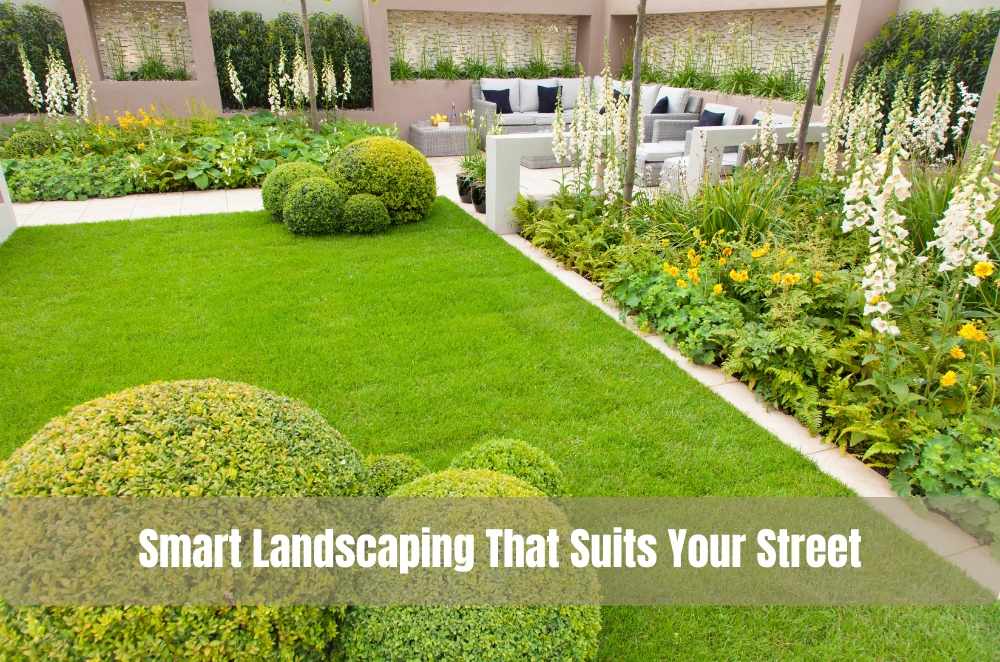
Landscaping that genuinely fits a neighbourhood isn’t about perfection; it’s about how a space works when real life moves through it. Most people searching for local landscaping specialists want reliability, not extravagance, because the yard has to perform every day—through heat, rain, quiet mornings, and busy weekends. Landscaping should hold its shape without demanding constant fussing, and it should settle comfortably into the rhythms of the street. When plants survive the rough weeks, and paving stays firm after heavy rain, you can relax. And that’s the real aim: a yard that quietly improves your home without swallowing your time, budget, or patience.
How do local conditions reshape landscaping results?
Local conditions set the terms—sun, soil, wind, and slope decide what thrives and what drains your wallet. Miss those details,s and the landscape starts arguing with you instead of supporting you.
Every suburb carries its own quirks. Some blocks heat up early and stay warm; others lie in cool pockets where moisture lingers. These shifts shape everything from irrigation zoning to plant selection and edge reinforcement. Clay-heavy soil moves with the seasons, so paving needs depth and anchoring. Poor drainage creates headaches: pooling near pathways, drowned roots, and sliding mulch. Sun angles change across the year, so we map them before choosing structure plants or deciding where to put seating. Honest landscaping listens first, then builds.
To help homeowners navigate these choices without drowning in jargon, our practical local landscaping tips provide guidance tied to actual on-ground conditions rather than loose generalities.
Native backbone plants hold strong through heat spells.
Zoned irrigation prevents over- and under-watering.
Subsurface drainage protects paving and lawn edges.
Getting these fundamentals right saves money long-term. A thoughtful site plan prevents the classic cycle of replanting, reshaping, and repairing. With staged work—starting with trees, major beds, and conduit paths—you lay structure that ages well and stays adaptable.
What delivers value for “landscaping near me”?
Value appears in the quiet details, not the flashy ones. Everyday usability—walking lines, shade, privacy, and upkeep—matters far more than ornamental features.
Strong value often begins at the kerb. A clear front path that sheds water, beds that don’t spill out or collapse inward, lighting that makes evenings safer rather than theatrical—these are the elements that make a yard feel complete. Plants should be resilient and widely available so replacements aren’t expensive or difficult. Soil improvement might not look impressive on day one, but it’s the backbone of healthier gardens, better plant growth, and easier maintenance.
Screening becomes another point of value. Not all blocks have the luxury of deep setbacks, so we use layered plantings or compact structures to soften boundaries without feeling boxed in. And when space is tight, we design circulation that doesn’t steal from the few usable metres available. Good landscaping respects your time, your budget, and the natural character of the block.
Choose robust, affordable plants over fragile trends.
Stage work so budgets and seasons work together.
Use honest edging and correct fixings to avoid early failure.
When someone searches “landscaping near me,” they’re usually looking for simplicity—work that meshes with the street rather than an imported style that collapses once summer arrives.
How do we keep maintenance low without losing character?
Low-maintenance landscapes aren’t sparse; they’re cleverly layered. Structure plants give shape, understory shrubs fill gaps, groundcovers control weeds, and mulch shields soil from heat and erosion. Together, they reduce the scramble of weekend chores.
We choose trees scaled to the property so roots don’t bully paving or fencing. Shrubs are selected for natural form, not constant clipping. Groundcovers spread steadily but not aggressively, adding colour and covering bare soil where weeds would settle. Irrigation runs early mornings, guided by rain sensors, keeping water use efficient. Awkward slivers of lawn are trimmed entirely; they’re usually the thirstiest, least rewarding parts of any yard. Seasonal care stays small: a mulch top-up before summer, selective pruning for structure, and targeted wetting agents when the soil tightens.
The result isn’t brittle, fussy, or theatrical. It’s a yard that feels lived-in, steady through storms, and forgiving when life gets busy. Even after a run of hot days or a wet week, the space holds its shape.
conclusion
Landscapes earn their worth through reliability—spaces that stay functional, attractive, and low-pressure year after year. We favour practical structure, resilient plants, and staging that respects how families actually use their yards. When those choices fall into place, weekends open up, maintenance shrinks, and the yard becomes part of the home’s rhythm. And the benefits aren’t just emotional; the market keeps showing that Sydney landscaping boosts property value when the work is thoughtful, durable, and grounded in local conditions.






Write a comment ...